I tell you what: variety is in this end of year concert calendar. As 2023 winds to a close I’ve got a few concerts, each quite different from the other!
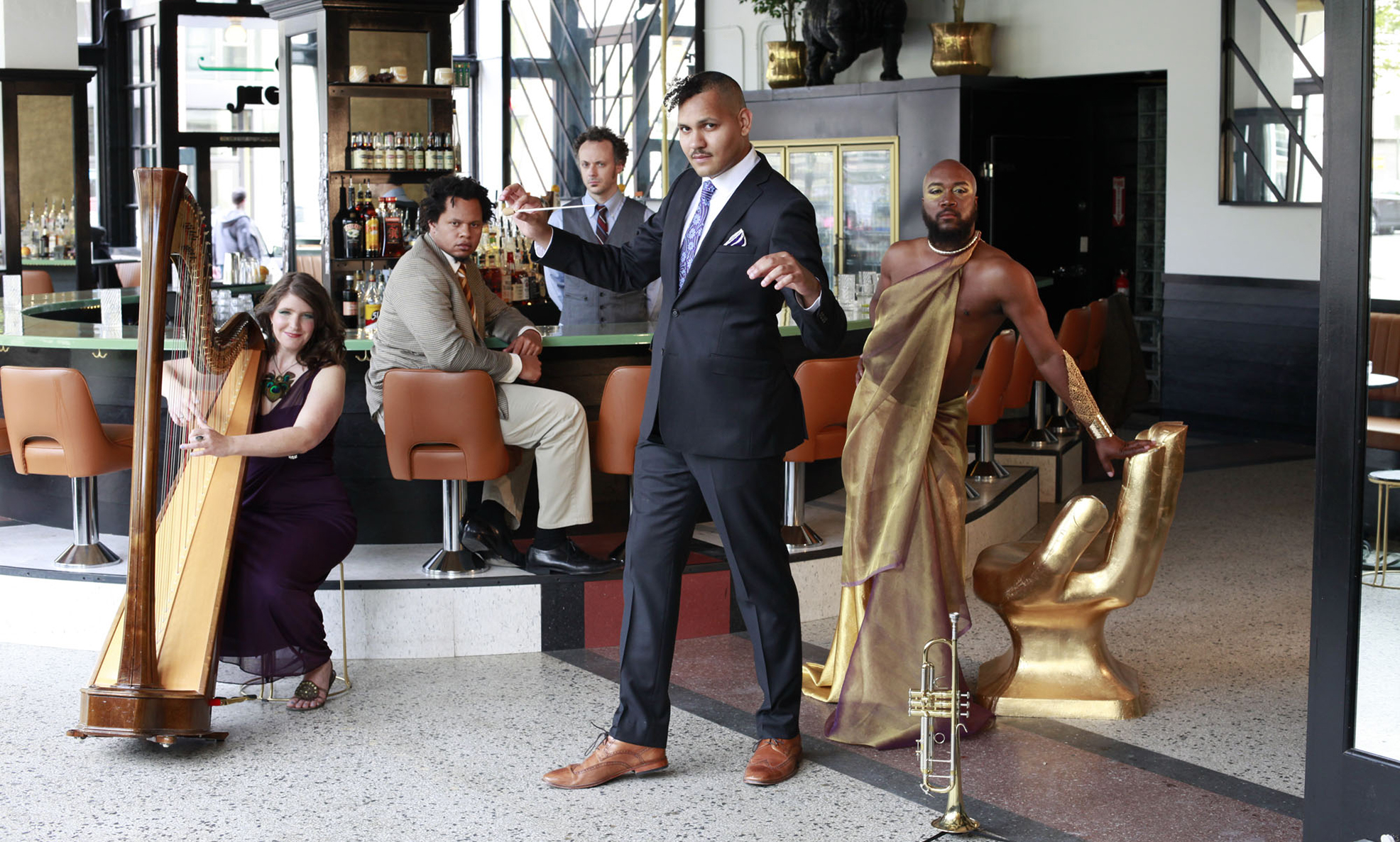
First up Nov 16 – 19 Thin Skin the movie – screening in Seattle,Los Angeles,NYC (Brooklyn) Once upon a time I was in a band and that led to another band that led to the leader adding a comedic monologue to his body of musical work. That person is Ahamefule Oluo. His Off Broadway play, Now I’m Fine, became fodder for the movie Thin Skin, now showing in three cities! Follow here for more information.
Next is a variety show: Dec 2 Bouquet Bouquet – Artist salon night of music, poetry, dance, lecture, and prose curated by poet Kary Wayson 7pm Antique Sandwich Shop 5102 N Pearl St. Tacoma, WA
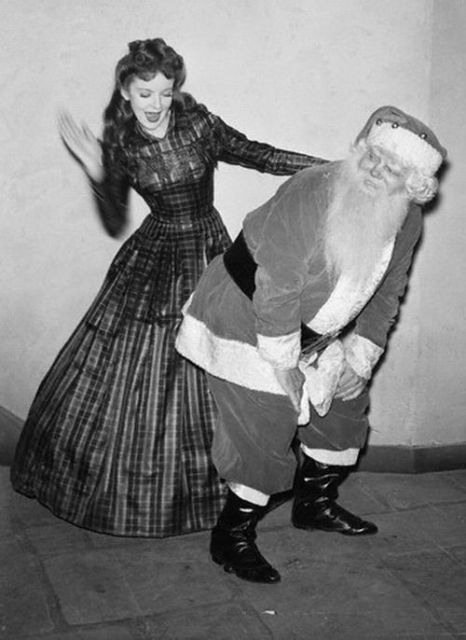
Winter Solstice shopping: Dec 21 Solo Harp Everett Mall – I will be playing harp next to Santa 1402 SE Everett Mall Way, Everett, WA 98208
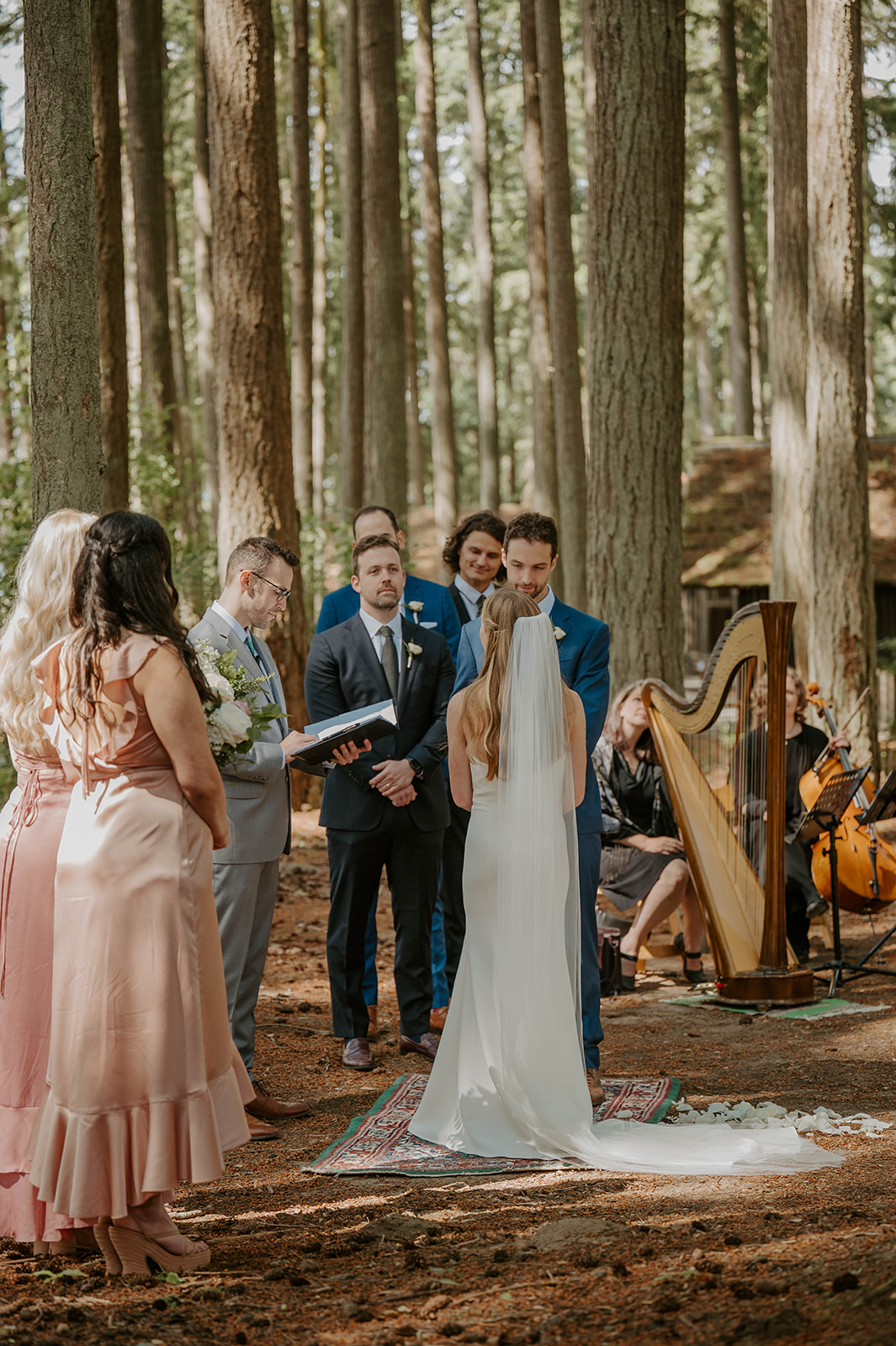
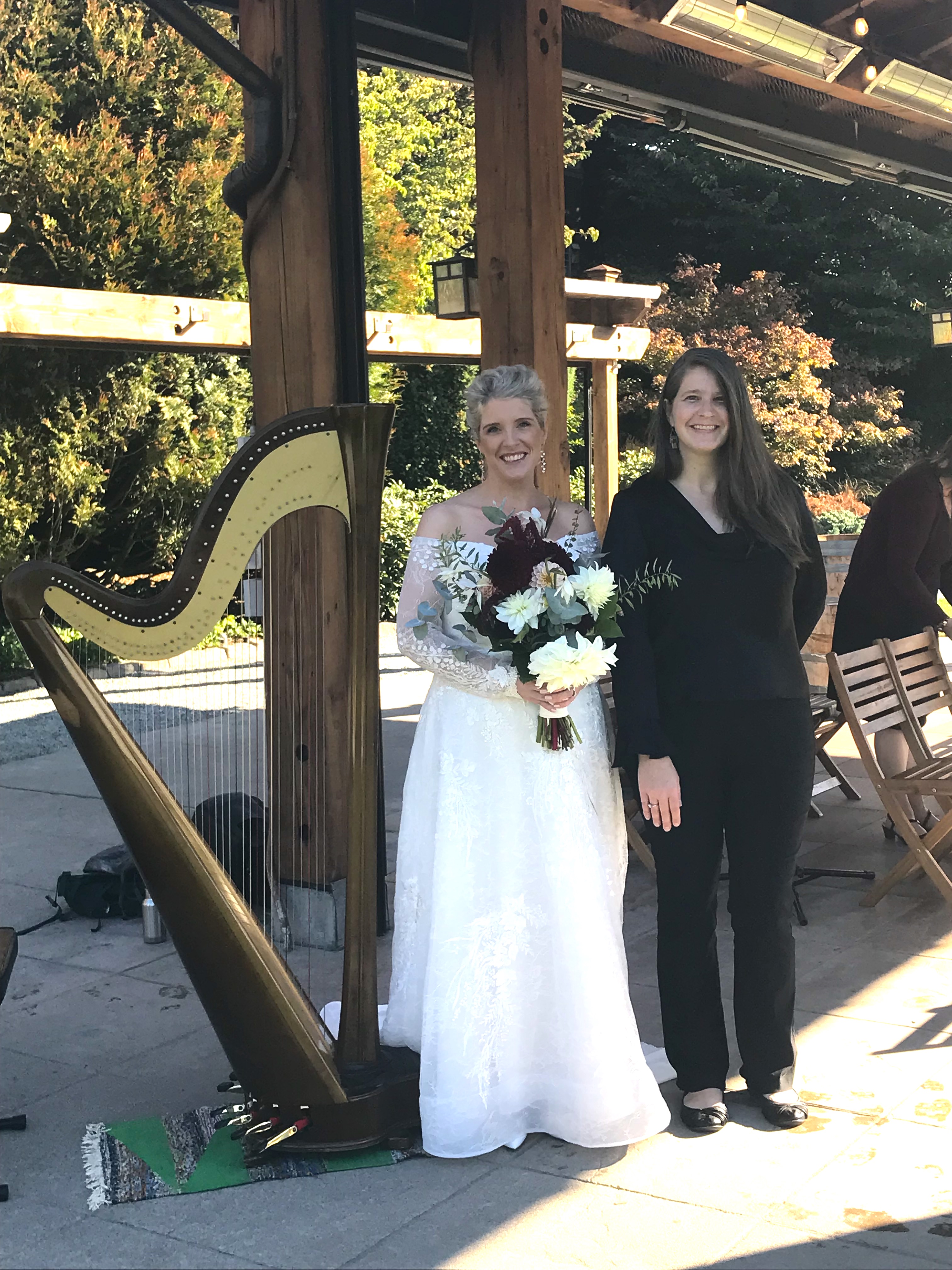
I played my first wedding ceremony while I was in high school, for young friends in love who hired me to play Pachelbel’s Canon on harp. It was a traditional church wedding, and since then, I can estimate I’ve played over 500 weddings. It certainly is something I enjoy offering to others and I feel honored to be invited to play music for these ceremonies.
The first thing I always ask my clients when they are choosing wedding music is: what is the general feel of your wedding? A wedding theme can help a bride and groom pick out songs, and it can help me better understand who they are as a couple. Is the ceremony rustic? Is it upscale? Boho? A traditional church ceremony? Is there a cultural theme?
Answers to these questions help narrow in the vibe that the music will create. A rustic farm wedding might call for Americana or Irish folk songs. An upscale downtown hotel might call for classical pieces or jazz. A traditional church wedding will likely involve Bach and pieces you might think of synonymous with weddings (Here Comes the Bride/Bridal March) as well as religious. Finally, a culturally themed wedding will include songs from that nationality or region of the world. For instance, a Chinese wedding might include old world folk songs like Cherry Blossom, with a modern flair like video game songs, or movie theme music. For a traditional Indian wedding, I improvised a lot in Eastern keys.
The next question I ask a couple, and perhaps more obvious, is what kind of music do you like?
In no particular order, I’m sharing some 2021 highlights playing harp, teaching, and writing.
Centrum Artist Residency I spent the month of March 2021, in Port Townsend, WA, on a truly regenerative and inspiring retreat. Through Centrum Foundation and Fort Worden, I was able to live in a cabin on the edge of the woods where the Straight of Juan de Fuca flows into Puget Sound, watch eagles and deer at my door every day, beachcomb, hike, and oh, yeah, squeeze in a little work! Focus of my work was on Harp Escape compositions and arrangements, as well as solo improvisations (like this one) and with my friend Josh Rawlings.
Harp Escape Make-Over Since 2019, I have been working on Harp Escape, a therapeutic harp series of meditative audio and video. During this time, I’ve recorded nearly 200 audio tracks and done over 60 posts of writing, video and sheet music arrangements for Patrons! That is a lot for me to feel good about, as far as general productivity goes. Harp Escape is having a make-over this winter. In 2022, I’ll be moving forward with edits on individual tunes, then releasing singles on the various streaming platforms.
Making Music a Healing Process This pandemic time continues to challenge all of us, so how can we include well-being in our daily work? I was asked to be guest speaker for Seattle Music Teacher’s Association in March of last year, talking about how to merge teaching with healing. It almost seems imperative to do so. As a Certified Clinical Musician, I thought about the mindset I put myself in, in order to play bedside music for people in physical pain or suffering from anxiety and grief. Much of that mindset can be applied to how I play music in general, so I like to share that with students. In this post, I wrote up 5 ways how to make playing music a healing process.
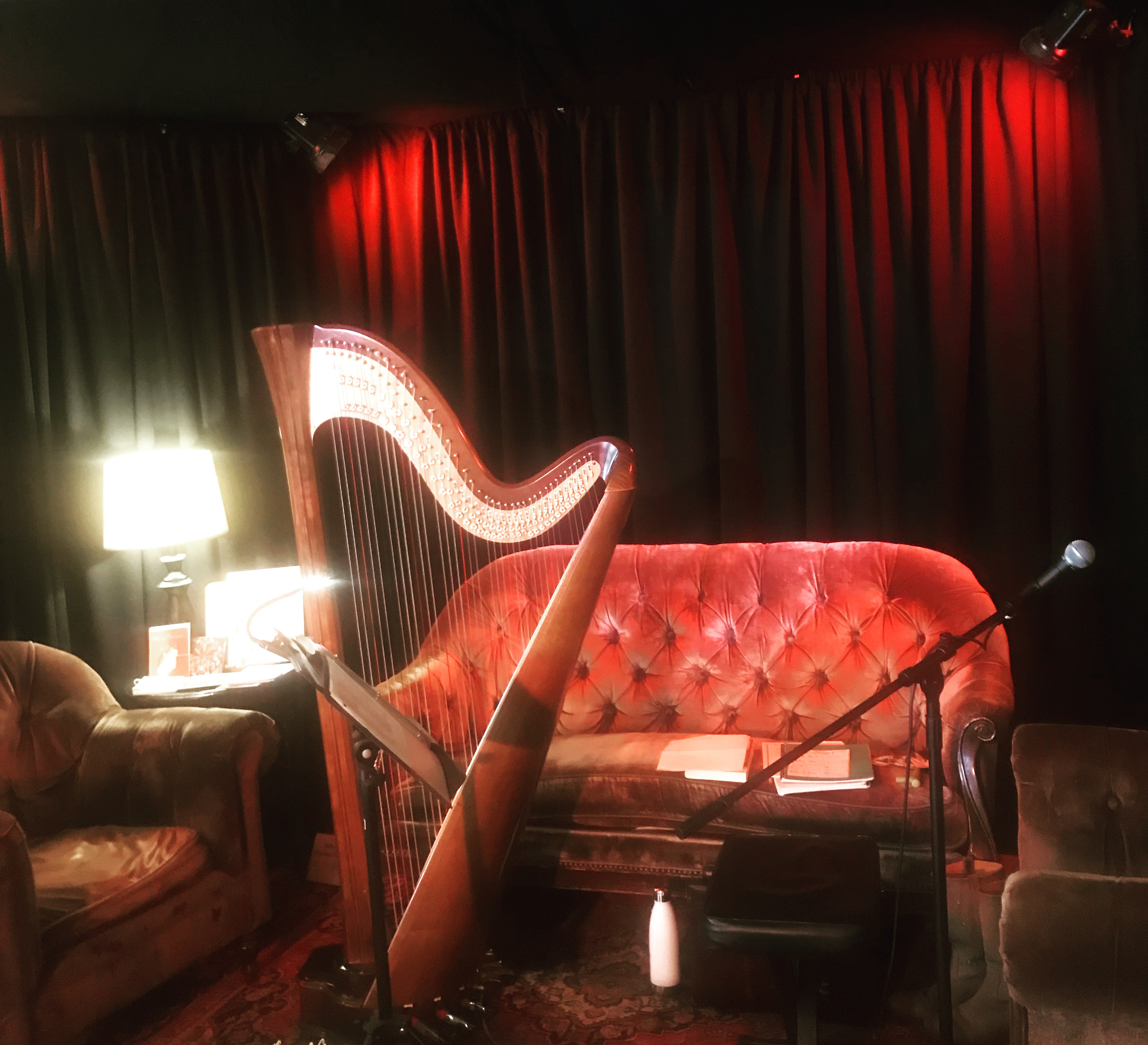
1st Live Concert in 20 months! In December 2021, I played my first public concert since March 2020 lockdown. Looking Glass Coffee, a sweet café in Snohomish, WA offered the perfect backdrop for an afternoon harp music: red velvet curtain stage, high vintage tin ceilings, and killer coffee. We were all so pleased, I’ll definitely be making another Sunday afternoon come back in the New Year. The pandemic continues to be a dicey time for performing live music, and I am thrilled to have a found a welcoming venue that matches harp music so well!
10 Tips on How to Improvise on Harp I’ve been a fan of creative self-help inspirational books for years. From Natalie Goldberg to Stephen Nachmanovich, I’ve been studying prompts, quotes from the masters, and artist psychology for a long time. This Top 10 list for harpists helps unleash the timid player – many harpists are classically trained or play traditional Celtic tunes. Improvising for anyone can feel like uncertain territory. These tips take you back to “beginner’s mind.”
Circle of 5ths 2.0 Virtual Harp Course on Udemy I pre-recorded a workshop for the first time! This is a major accomplishment for me, and I put many hours into creating a class on demystifying a tricky musical topic: The Circle of Fifths. The class is available on Udemy and is at advanced beginner – advanced intermediate level.
with some students from Let’s Harp Together! workshop in October 2021 at Dusty Strings
Harp Seattle Workshop – Let’s Harp Together Another first: I taught my first in person group workshop in over 2 years! The theme of Let’s Harp Together, got everyone playing songs together – something none of us had done since the pandemic. It was wonderful hearing all the harps vibrating together (it was a few hundred strings!). Thanks go to Harp Seattle and Dusty Strings.
Return of the Wedding Cermony
Return of the Wedding Ceremony My guess is that I’ve played music for about 500 weddings and counting. Most of my summers are booked out for months. 2020 was different. By the end, I had played a mere three weddings, which I suppose was good all considering. While 2020 ceremonies were very intimate and minimal, 2021 was a return to my usual full calendar, larger gatherings (though masked of course). I played for more than one couple who had re-booked their ceremony more than three times! Once more, it was such a pleasure to return to playing harp for another season of wedding of couples, including some really amazing natural scenery at the Treehouse Point, Leavenworth and at Mount Rainier. I feel so lucky!
It is Veteran’s Day and I miss my friend Crysta Casey, who was a military journalist, poet, and painter. We met in 2002 at Red Sky Poetry Theatre (Seattle’s longest running open mic series). We were quite different people – she was 25 years my senior, a military veteran, and sufferer of extreme mental health issues – yet we had a very casual and organic friendship that came together quite effortlessly. It was only after her death, did I realize she was also my mentor and artistic advisor.
After the reading that night, Crysta and I talked on the street for a long time. She smoked cigarettes as we realized we shared similar poetic influences (Anne Sexton, Sharon Olds, the Surrealists, and others). We exchanged contacts to meet up and share poems. What started as frequent cafe meet-ups to read/critique each other’s work, eventually turned into a weekly date in Crysta’s Belltown apartment with wine and food and an exchange of books and literary magazines.
Harp Escape is a series of videos and recordings dedicated to relaxing and calming music. What started out in 2019 as a YouTube video series, has turned into a pandemic weekly live concert series (on Facebook) and a new hour of instrumental harp every month (on Patreon).
A contemporary of Claude Debussy and Maurice Ravel, Satie was also a part of the French Impressionist movement. He was older that the others at that time and somewhat reclusive. He was a bit of a mentor to some of the younger musicians at the time, though his use of whole tone scales was considered unusual. Whole tone scales are based upon the Pythagorean theorum, also known as The Golden Ratio. I think one of the reasons why Satie’s music is so timeless sounding is because they are based upon ancient sounds. These old intervals in the scales are striking because they sound at once soothing, unusual and yet familiar.