Once, I was booked for a wedding that led to love at a crossroads. Back then, I lived in an easy-to-get-to Seattle neighborhood. I had a home studio that I used for teaching harp lessons at the back of my house, and I also had wedding couples visit me there for in-person consultations, which was a popular perk that people took me up on.
The week of the wedding arrived. Customarily, I do a check-in with my client 1-2 days before the event to confirm the details I cannot err on: arrival time, play time, and song details to name a few. I spoke with the bride, and everything was good to go!
My first wedding gig on the harp lead me to learn two of the most traditionally popular pieces of wedding music of all time. Lapiz lazuli was the color of the sky of the stained glass window next to me in the church. When I was 17 years old, I had been playing the harp for three years, and I had a decade of piano experience. Also, I had been playing pipe organ for mass since the 7th grade, so I had a pretty good understanding of how ceremony worked.
I was listening to Ada Limon, our nation’s former poet laureate, being interviewed on NPR’s Fresh Air. My ear caught a phrase she said, “sing back into the places you love.” By chance, I have been reading her book, You Are Here,which is a culmination of a larger project, a collection of poems on picnic tables around the America’s treasured national parks. Limon said that she thinks these times we are living in could define humanity forever. She collected some 50 poet’s responses to that idea in, You Are Here, inviting readers to take a closer look at the present moment.
I love this phrase! Singing into the things that bring us most joy, that we find most beautiful, will get us through these turbulent times. When the DMV, passport office, SNAP benefit, and air traffic control are not working as they once reliably did, remembering to hold space in the day for what we love can get us through. The word “back,” singing back to, is not backwards. But rather, I think of remembering back to who we truly are, remembering what we love to do with our lives. I have been working hard at this, especially this year. It is a challenge borne not out of nostalgia, but one out of remembering.
The great Sufi poet, Rumi wrote: all beings stream at night / or during the day / into some absorptive work / into the loving nowhere.
I have long been a fan of this verse because it’s the original streaming platform! What he is saying is that we can connect to the Divine flow anytime we sleep, love, or work on the things we lose ourselves into with joy. (Getting into this streaming zone is a brain wave pattern.) When we get there, time does not exist. It becomes expansive. After this experience, we feel happier and renewed. And the most beautiful thing of it all – is free! And its right inside of us!
This season, I sing back into the places I love by walking in the forest, listening to one of my children read to me, and improvising / playing music. I feel both renewed and relaxed (or as my son pronounced it when he was 4 years old, rah-wax), which makes me think of waxing like the moon, ebbing and flowing. Either way, so at peace, it hardly matters to speak.
If we were to all practice that which we most love, I think the world would feel more renewal than heartbreak. If we all could just tap into that which sings our heart awake just a little bit more, then I think we as a collective would be more untouchable by that which does not awaken us. And let’s be honest: there’s a lot of activity in the outer world of what can harm us.
By singing into the places we love, there isn’t anyone or anything that can take that experience away from us. Its non-material. It doesn’t require a transaction. It is something that each individual and only each of us can create ourselves. It is not given. It is within.
Being given the idea to sing into a place you love unlocks the human spirit more than a news headline, more than what government legislature says it is or is not accomplishing. Or, in the words of William Carols Williams:
it is difficult to get the news from poems yet men die miserably every day for lack of what is found there
As for me, one of the things that lights me up is poetry. What places would you like to sing into?
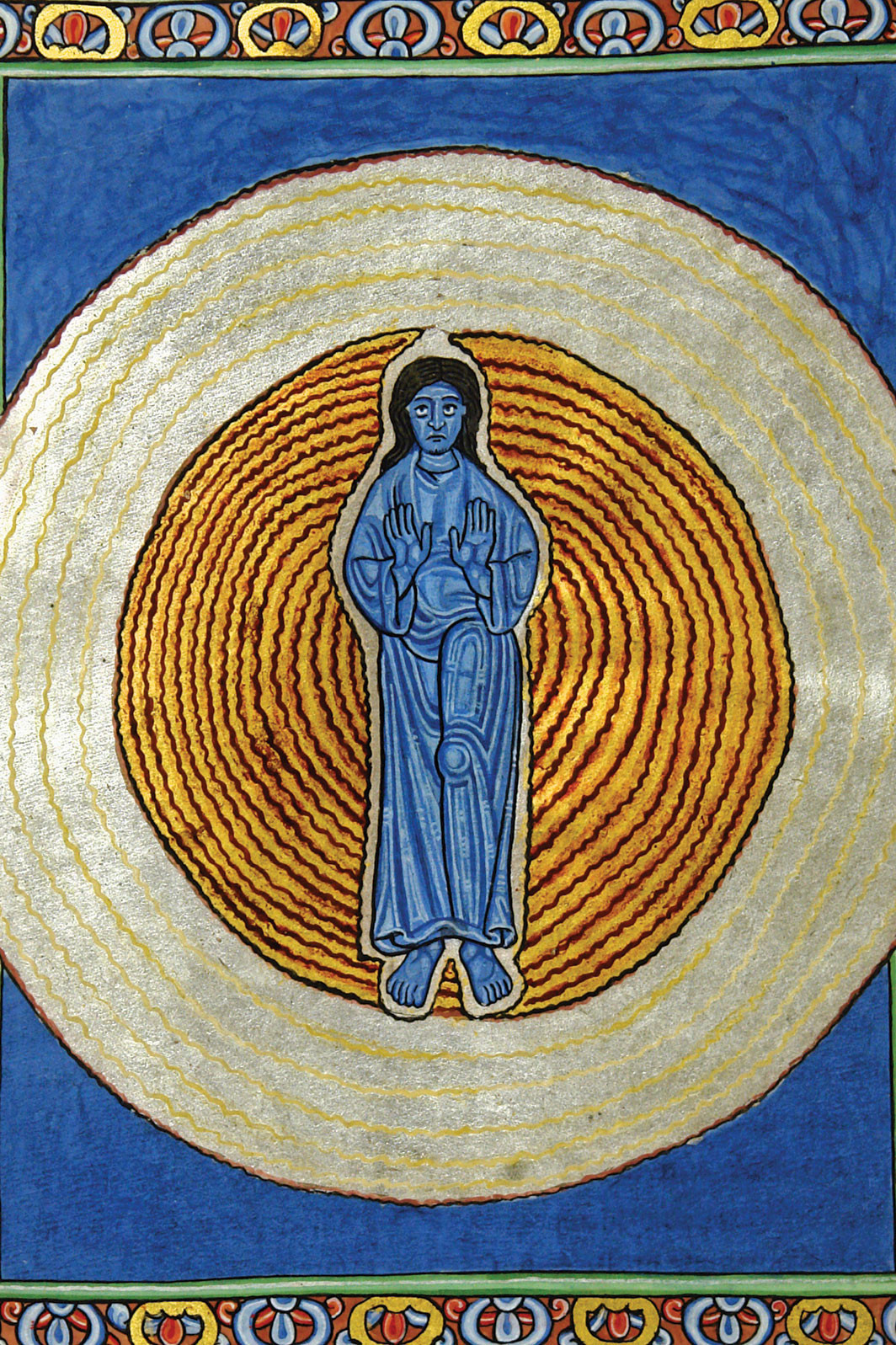
Many musicians, especially those who have taken music history classes and read sheet music, are aware of who Hildegard von Bingen was. I was first introduced to Hildegard’s music as a teenager by my organ teacher, when I was playing for mass. Fast forward a few years, and I went to university where I heard about her again (in music history). I even ended up writing a paper on her. Thirdly, I came across Hildegard’s music when I played harp in hospital and hospice as a Certified Clinical Musician.
Who Was Hildegard von Bingen?
Hildegard von Bingen lived from 1098-1179 in Germany during the Middle Ages, at a time when education and literacy were controlled by the Catholic Church. Hildegard was “given” as a tithing to the church, not an uncommon practice of the time. When she was 14, she was sent to live a life of religious devotion in Disibodenberg.
Hildegard von Bingen was an visionary artist, herbalist, healer, writer, philosopher, poet, and composer born at the end of the 12th Century. Her wisdom elevated her to be a highly respected and well-known within her lifetime. What a Medieval mystic can teach us about wellness today is linked to music and plants as medicine.
Like Hildegard von Bingen, I believe herbs (and music) can soothe and heal the body, mind, and spirit. Herbs may or may not cure an ailment, but they can be a balm to what ails you, just as therapeutic music plays a part in a healing process.