Harp Blog

A New Computer for Election Day!

There is so much to say on a blog when you’ve been absent for six months. The biggest news: I have a new computer! I am extremely grateful to be using this new fabulous machine!

The old Mac impeded upon my ability to upload video properly (so I’ll be fixing that previous entry) as well as record any music at home; the old computer’s memory was full. Now I’m back in the 21st Century and very excited about it.

My focuses this Fall are (in no particular order):

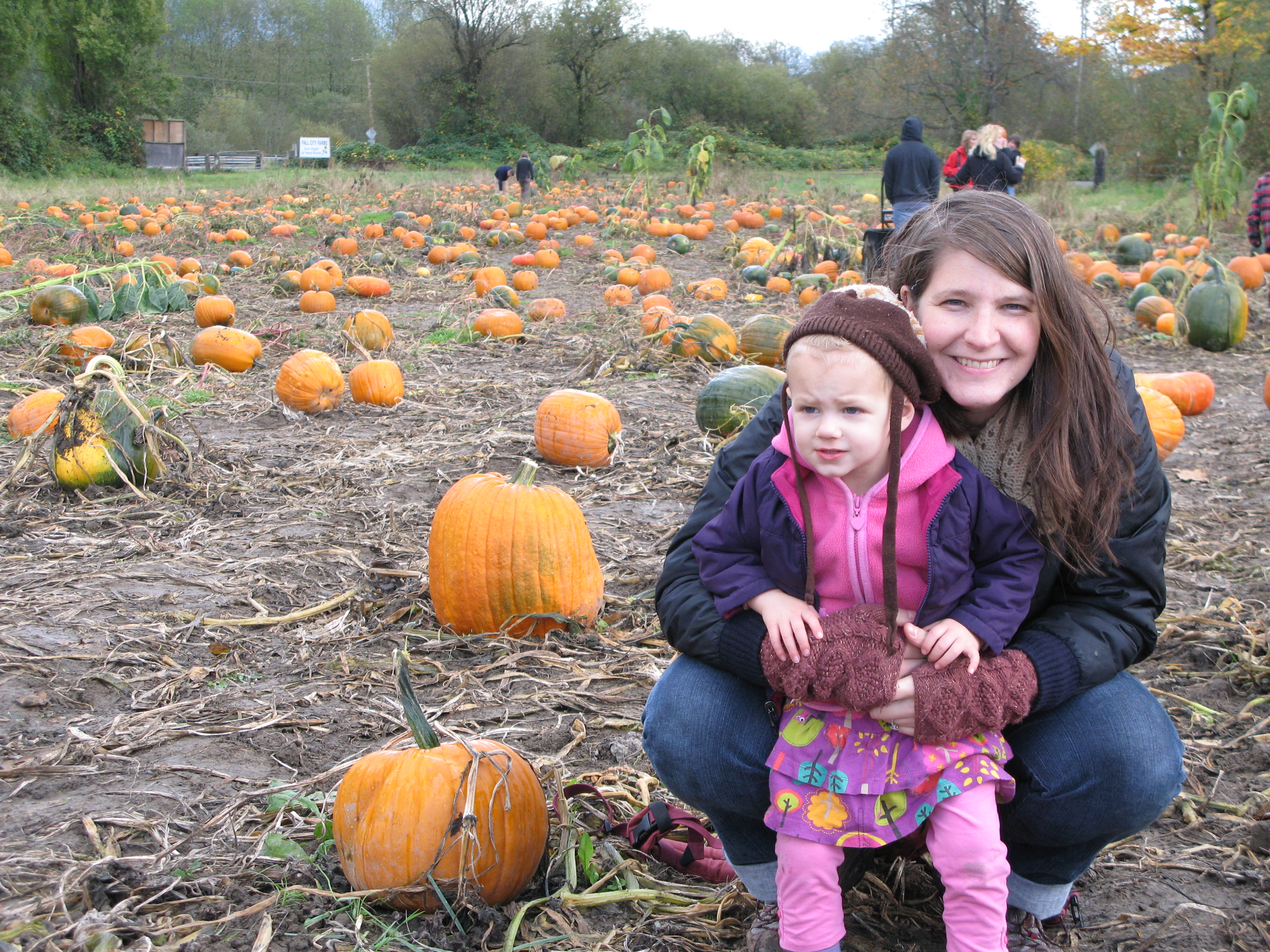
Fall City pumpkin patch

“The Salt-Water Erasures”

I have been asked by Heather Bentley, to read some new poetry coming up on July 8 at the Royal Room. The evening is called Club Shostakovich, which Trio Pardalote will curate.  It is a free evening of chamber music and poetry – sophistication and affordability at their best! Yes. You should come.

csposter1

I’ve been re-working some older poems this spring and summer, I guess mostly because of limited time. I had been toying with the idea about doing some sort poetry experience, when and opportunity to do something in the field (literally, a field!) came my way. I’ll be sharing “The Salt-Water Erasures” first at Club Shostakovich, and then up at Smoke Farm in Arlington, WA for the Lo-Fi Arts Festival. Yes. You should also make a drive to the farm. It is pretty and large and there are few rules to abide by other than to be a decent human being and enjoy yourself. Pretty much the same as any other day, only at a large remote farm with a few hundred artists, so that’s pretty special.

Here’s a little artist statement of where my head is on this subject these past few weeks:

I have been thinking about water of the body – the human body and the Earth body – and how oceans and humans have salt. The equations of salt in most oceans are about 3%, whereas The Dead Sea is a shocking 33%! The Dead Sea has been noted for its unique saline qualities, dating back to the Ancient Greeks who believed in and had stories of Three Muses (or Fates). Sappho, who was Greek, was the first woman poet that we know of and her poems where originally written on papyrus leaves. Over time, the leaves have decomposed and words are missing from the original poems. All translations of her work that we have today are open for interpretation because of this. Like the ocean, time washes away everything we create, yet some things may remain in fragment. Being a new mother, my creative work time has eroded to small bits during the day here and there, rather than large chunks of time. Conversely, I am interested in the sojourn that the creative process takes when revisiting completed work. I plan to revisit the poems I wrote two years ago, when my daughter was in utero (another body of salt water floating in salt water). I will re-write some of the poems and dub them, The Salt-Water Erasures. Erasures are a method of re-writing poetry by literally erasing some of the original words to create something new, almost fragmentary. Some of the poem will have repetition,which will allow for a certain meditative quality to emerge, the way water lapping continuously has for someone sitting at the beach.

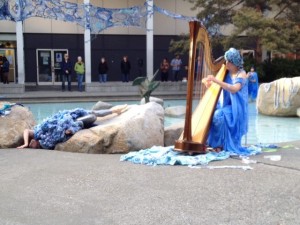
Mater Matrix Mother and Medium with Mandy Greer

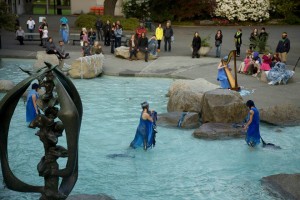
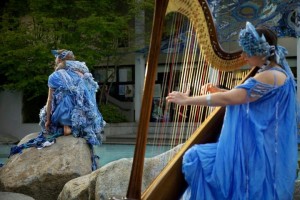
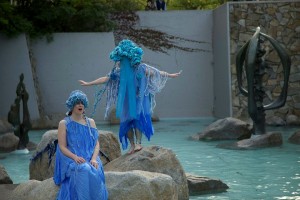
These are some of the photos (taken by Rodrigo Venezuela) from Mandy Greer’s Mater Matrix Mother and Medium performance at Seattle last month, in May 2012. It was a pretty amazing integration of pre-recorded harp and voice with live music performance on top of that; costumes by Mandy Greer; choreography by Jessica Jobaris.

Dupen Fountain
Dupen Fountain
Muse in the Grotto
Muse in the Grotto
Siren
Siren
Spinning Measuring Cutting

Figeater

My poem Figeater (for Beth Fleenor) just got published on the WA State poetry site thanks to our Poet Laureate, Kathleen Flenniken. http://kathleenflenniken.com/blog

Figeater
for Beth Fleenor

That fig tree attracts wasps. They get wobbly
in the heady fermented fruit

flying lazily on the summer wind
like some Sinatra party guest after martinis.

Masts clang down the hill in the harbor.
Another siren calls while the dusk wraps its ethered scarf

around the neighborhood and the raccoon,
in his nocturnal wonder, takes one look at the tree

to see his paradise, his destiny, like a moth
sees his paramour flame, he knows

he will reach supreme love
from the bright fig at the crown

now illuminated by the moon. The limbs
are as soft as quartz, scratching easily

as he climbs up & up & up.
Drawn out is this moment of reaching—

the way he scampers on the thin branches for footing,
stretching towards splendor, there it is: a purple sack,

a Lilliputian’s laundry bag. He touches as high
as he can without falling. And then he does

manage to clip the fruit with his paw
joyously dropping into his mouth, the wet

and juicy center. A smile perhaps
and laughter at the bulging size of the fig

which in one second slides down his throat
but gets stuck. And there is our raccoon—

on tip-toes in the moonlight at the height of his happiness
in the tree choking. After that there is a fall,

followed by the brief silence of being airborne
before landing at the crux of two crossed branches

that bounce of the sudden glottal stop. Uh-oh.

Everyone is gone from the house to have heard
the accident, but in the morning they find him

strange fruit hanging from the Mediterranean tree.
And so he is plucked (apprehensively)

his soft furry body like a forgotten gym bag
stuffed with stinky socks. He is processioned in a bizarre majesty

down the street on the shovel used to dig his grave.
Now he rests in the old apple orchard

of the abandoned house (half burned out in decay)
there beneath the one oak tree covered

in ivy vines that in a few years from now
will have a small fig tree in its shadow

that started from the seed
in the raccoon’s belly.

published in The Far Field