10 Tips on How to Improvise on Harp

You might be asking yourself, “How can I improvise? How do I start?” These are questions students ask me, and honestly, I have been working on finding answers to these same questions for decades!  

As a harpist, most of us learn how to read all of the little black dots on the page with accuracy. We often have practiced with such scrutiny that to play something off the page feels strange or wrong. I have met many classically-trained musicians who would agree.

Before I give you a couple of tips on how to improvise, let’s look back to our beginnings of playing music, to a time before we “knew” how to “play.” I am willing to bet that the first time you touched your instrument, you were as curious as a child. Have you ever watched a group of pre-schoolers play? They naturally grab objects and play pretend, never second-guessing themselves. With this “beginner’s mind,” let’s start improvisation.

Tip #1
Own it. Act like every sound you make is intentional, even if it surprises you.

#2
Use chord symbols in the music notation to give you clues on what notes might sound good, in addition to the notes written.

#3
Know the scale you are playing and don’t leave it.

#4
Know the scale you are playing and leave it. (I know! What I said above also applies, but if you want to stretch your boundaries, you should.) Brazilian writer Paulo Coehlo said “A boat is safe in the harbor. But this is not the purpose of a boat.” What I mean is: Explore. You can always come back to dock in your comfort zone original key. But you are not anchored down.

Continue reading “10 Tips on How to Improvise on Harp”

Only the Shadows Know

Umbra means shadow. In particular, it is the darkest part of a shadow. It also means a shadow cast by something that is opaque, not a solid state. I think about how even things we don’t see as being solid can take shape, like our thoughts becoming real. You know that phrase by Emerson, “You become what you think about all day long?” – I think that is true. Those shadows are thoughts, and those thoughts become beliefs.

We are all made up of light and dark, just like the equinox, a fine balance of sun and moon within. I find shadows so evocative. Perhaps that is why I have written more than one song about them.

The song Umbra comes on the return of a trip to see my family home for the first time in two years. This song had a dark feeling to it, it starts off minor but then ascends into a Major place. When I ask my students if they can hear the difference between minor and Major, we often describe feeling of minor as Halloween, sad, spooky, or lonely. Being in the shadows of not knowing can feel similar.

Continue reading “Only the Shadows Know”

Living “La Vie En Rose”

One of my favorite wedding songs to play is Edith Piaf’s 1940’s opus to love, “La Vie en Rose.”

I don’t speak French, but I can tell by the way she sings, that it is a love song of the most high devotion. She is smitten and lovestruck to the core. As she sings, she idolizes her lover, seeing him through rose-colored glasses. This is why I love playing that tune at weddings and recommending it to people even if they say they don’t know the song. Once I start playing for them, they soon realize they’ve heard it in some movie or commercial. The thing is, “La Vie En Rose” is sort of timeless.

The song plays to our highest ideals, not just about love, but about life in general. “La Vie en Rose” is looking at life optimistically. It is living rosie dreams and seeing the beauty in every day life. It is stopping to smell the roses. It is embracing imperfections and loving despite them. La vie en rose is “live and let live.” It is having ideals. Dreaming big. Finding joy in one’s life and being in the present moment. In literal translation, la vie en rose means the “pink life.”

Seattle Harpist
My Wedding May 3, 2008 (Seattle, WA)

Some say the meaning of the song is that of naïveté, that everything will be fine without paying attention to details. Assuming that situations will unfold in your favor doesn’t inherently mean that you are not paying attention, or working towards a positive outcome. In fact, I have found that the more I am invested in my situations, the better I feel through involvement.

Continue reading “Living “La Vie En Rose””

Poor Wayfaring Stranger, a Revived Pandemic Song

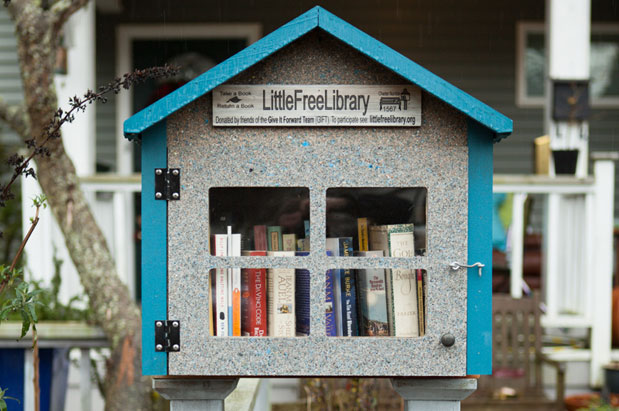
A version of sheet music for “Poor Wayfaring Stranger” came into my possession in 2020 Lockdown, as I was taking yet another neighborhood stroll. (1/10/22 update: download your own sheet music of this song.) I stopped to look at a Little Free Library. I found an unassuming prayer book (whose name I have since forgotten because I’ve returned the book), and in the back of it were songs with notation, hymnal style. As I spent some time learning “Poor Wayfaring Stranger,” I was intrigued by the somber lyrics and the story they told. The struggle of the character in the song felt very relatable (and still does) compared to what the world has been going through in Pandemic Times.

Seattle Harpist
Hidden gems of the LFL

History of the tune “Poor Wayfaring Stranger” comes from Civil War Era American, folk and gospel. It is possible that the song may have traveled to America with a German immigrant and been adopted into early 19th Century American folk singing. It is also possible that, given the time frame and the gospel nature of this tune, that “Poor Wayfaring Stranger” morphed into a Negro Spiritual, as it has a strong Christian message and speaks of a troubled world.

My solo harp version of “Poor Wayfaring Stranger”

Melodically, this folk tune probably traveled by oral tradition, meaning the notation wasn’t written down. The first time words of the song officially show up in America, they were inscribed inside of Libby Prison by a dying Union soldier. For this reason, “Poor Wayfaring Stranger” was also known as “Libby Prison Hymn,” however that name didn’t stick. More commonly, the song is also known as “Wayfaring Stranger,” “The Wayfaring Stranger,” or “I Am a Poor Wayfaring Stranger.” In the 20th Century, this song was recorded by musicians Johnny Cash, Emmylou Harris, Jack White, and Eva Cassidy.

“Poor Wayfaring Stranger” speaks to the trying times of the human spirit on the verge of death. The tune is part Christian hymn, part prayer, part woeful song, part ode to Everyman’s journey,

If we look at the lyrics (which also have nuances like the title), the 1st verse is:

Continue reading “Poor Wayfaring Stranger, a Revived Pandemic Song”

Wild Dreams and New Beginnings

One of my all -time favorite poets, Laurence Ferlinghetti, the great American bard and book publisher, died this spring just shy of his 102nd birthday. From his poem “A Sweet Flying Dream”
We drifted                       
wafted easily
We
flew wingless
Full of air
our hair
Buoyed us
We
trailed our slim legs
In streams of silver air
There
Was nothing
blowing us down
Or away
From each other

We cannot escape one another. Even though we haven’t been able to physically congregate for a year, we also cannot ignore each other. Though we may feel isolated, worried, and fearful as some of the outer world opens up, we are all floating in this unknown realm together. And if indeed we are flying, it brings us levity and sometimes loss of control. At times it might be easier to just let go.

I have wild dreams about what I’d like to see happen next in my life. Partly encouraged by an artist residency at Centrum; partly in response to the pandemic, I sense a new beginning on the horizon. A new chapter of life for us all is imminent. It is here in fact. There is no holding back, so, best fly with the tricks of our highest ability.

Continue reading “Wild Dreams and New Beginnings”