We are not learning music to be perfect. We are learning music to enjoy the process of playing. We are learning music to develop a skill. Let go of judgement! If you are hearing an inner musical critic and it feels like negative judgement, drop it. Let it go. You don’t want to be holding unto so much baggage.
If that seems too easily said, imagine that your fingers are actually holding onto little bags of judgment (from past/current teachers, conductors, peers, recording engineers, yourself, reviewers, parents, friends, neighbors, etc.). Imagine that these little critiques, each in a bag on your fingers, are weighing you down. They are slowing down your playing. That negativity is taking up physical space and you need to free it up!
Question: What if you got rid of that inner music critic? Answer: Your hands would feel the freedom to put your fingers on the actual notes you need to play.
Drop the mental comment section. Close down the critiques that don’t make you a better player. You can throw them away in the trash bin over there. Now, locate the comments that do help – the ones that say “don’t give up,” or “there now – that wasn’t so hard!”
You can keep the helpful comments, but put them in a safe place at a distance, like picture in a frame. Remember, you want to feel lighter. You want to free up your fingers to do the playing that you were called to do in the first place.
You have work to do. Your work is playful and exploratory.
You are practicing the process of showing up and being ready to play music. Playing music is not about perfection, so much as the journey you take to a place where the playing feels good! This is the work you love to do. By freeing your fingers, you are already doing what you need to do. Now, you are ready to practice!
We come to rituals to commemorate a moment in time, an event, or a loved one: a birth, love, a death. Often music plays a part in these rituals. Harp music in particular can be a meaningful addition to any ceremony. You need harp music for rituals and rites of passage. My work playing music for several decades at rites of passage and ceremonies of all sorts has given me a unique perspective on the process of ritual.
I have played harp since 1990, and I have been studying music earlier than that. As a young Catholic child, I was introduced to many ceremonies of the church – for holidays, feast days, seasons of the year, and of course, various passages of human life: birth, graduation, marriage, anniversary, and death. Since then, I would guess I’ve played music for nearly 600 weddings, and 500 funerals, memorials, and vigils.
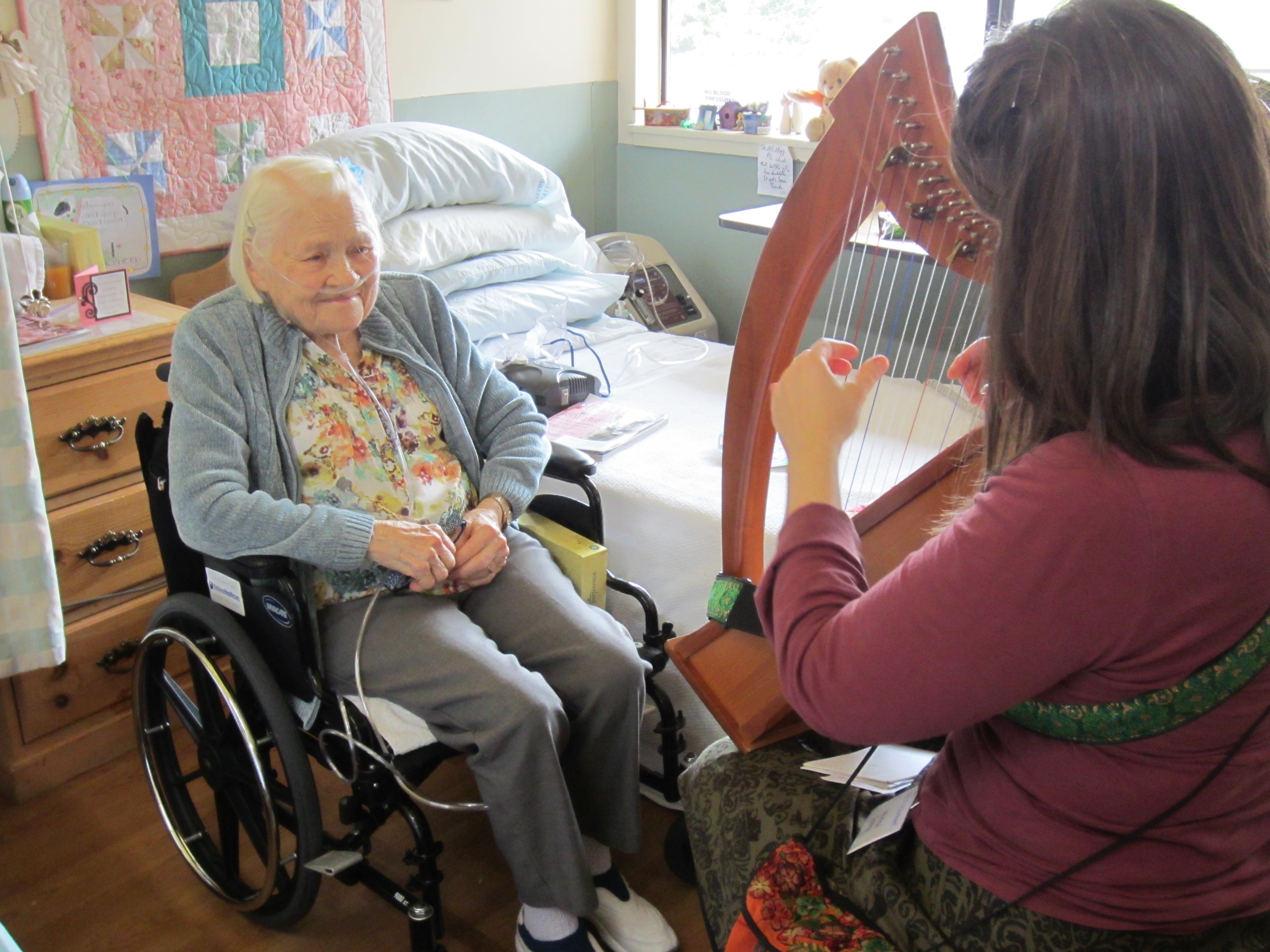
Often, when music is a part of a reverent ceremony, it is a service, rather than entertainment. For instance, when I worked for Providence Hospice as a complementary therapist, I played harp for clients whose life might be on the threshold of death at any minute. There are certain styles and sounds that are most effective at this time. Sometimes my client didn’t have any loved ones present, so the gift of music meant all the more to them.
I tell you what: variety is in this end of year concert calendar. As 2023 winds to a close I’ve got a few concerts, each quite different from the other!
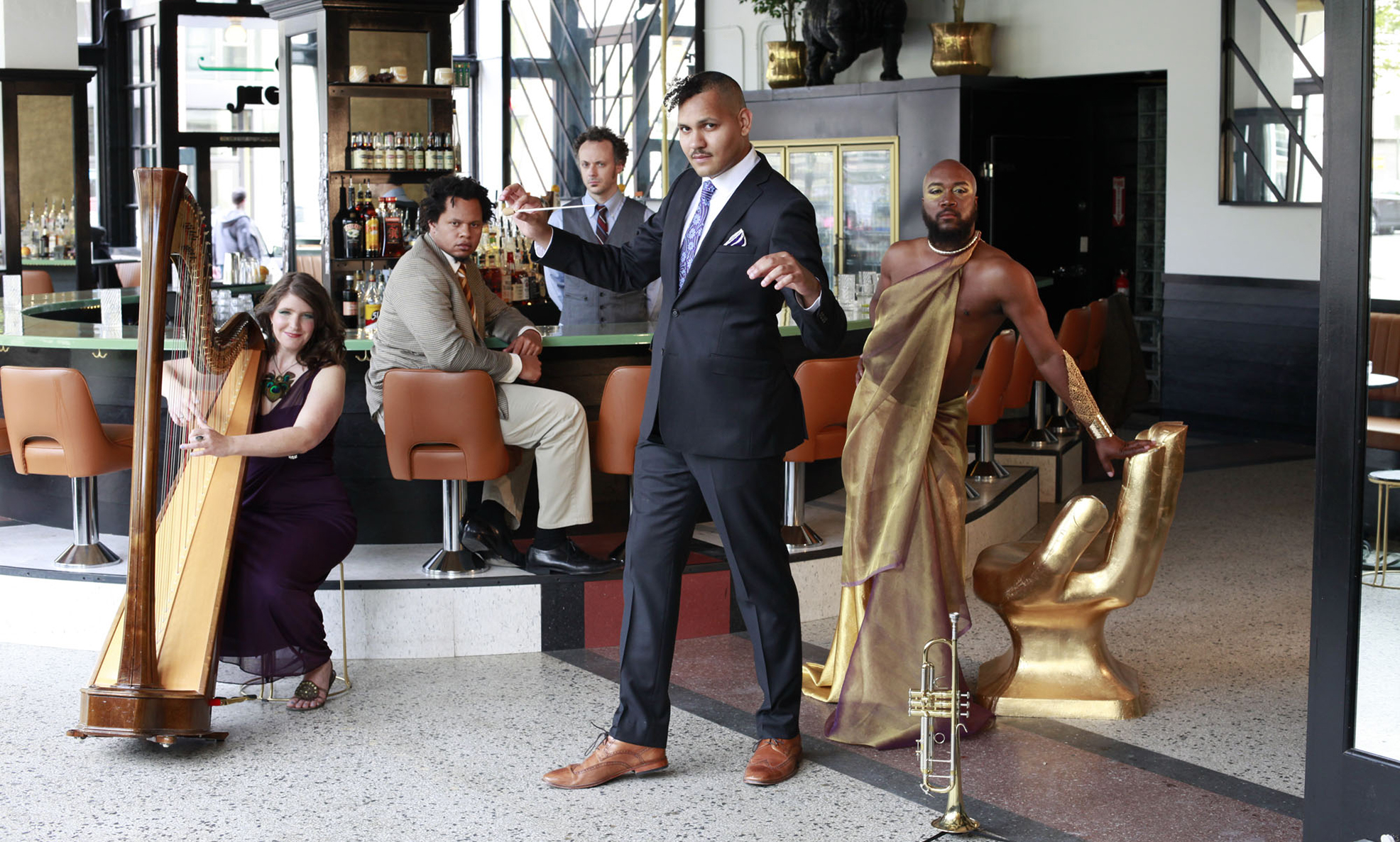
First up Nov 16 – 19 Thin Skin the movie – screening in Seattle,Los Angeles,NYC (Brooklyn) Once upon a time I was in a band and that led to another band that led to the leader adding a comedic monologue to his body of musical work. That person is Ahamefule Oluo. His Off Broadway play, Now I’m Fine, became fodder for the movie Thin Skin, now showing in three cities! Follow here for more information.
Next is a variety show: Dec 2 Bouquet Bouquet – Artist salon night of music, poetry, dance, lecture, and prose curated by poet Kary Wayson 7pm Antique Sandwich Shop 5102 N Pearl St. Tacoma, WA
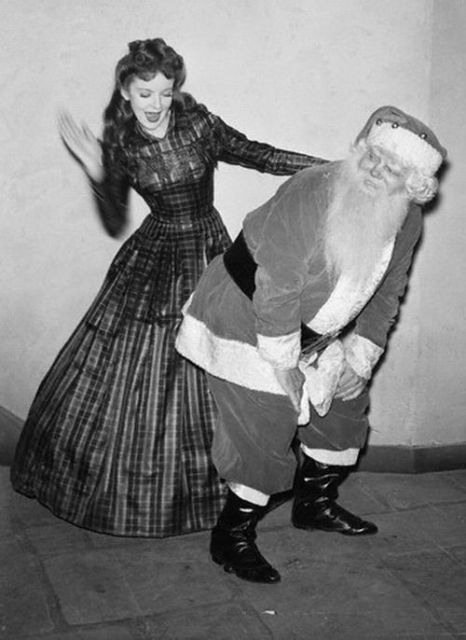
Winter Solstice shopping: Dec 21 Solo Harp Everett Mall – I will be playing harp next to Santa 1402 SE Everett Mall Way, Everett, WA 98208
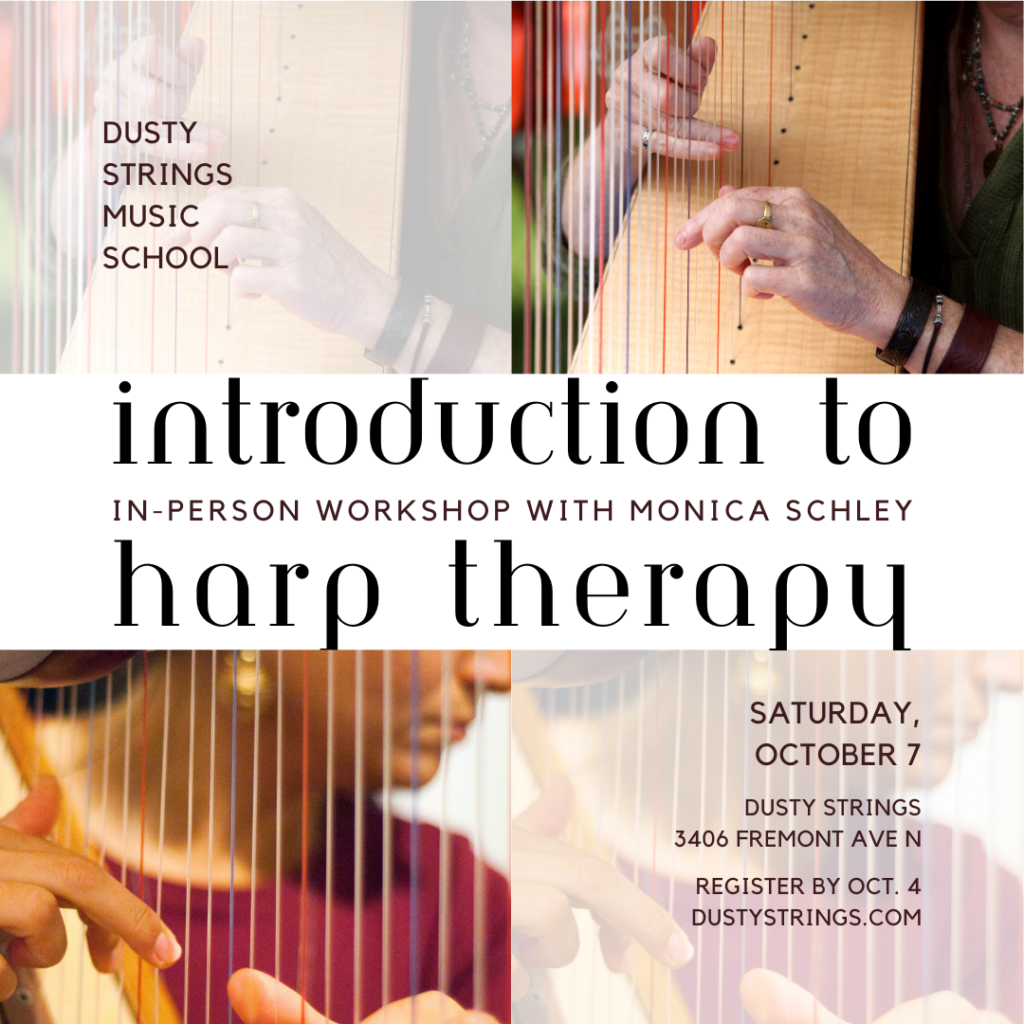
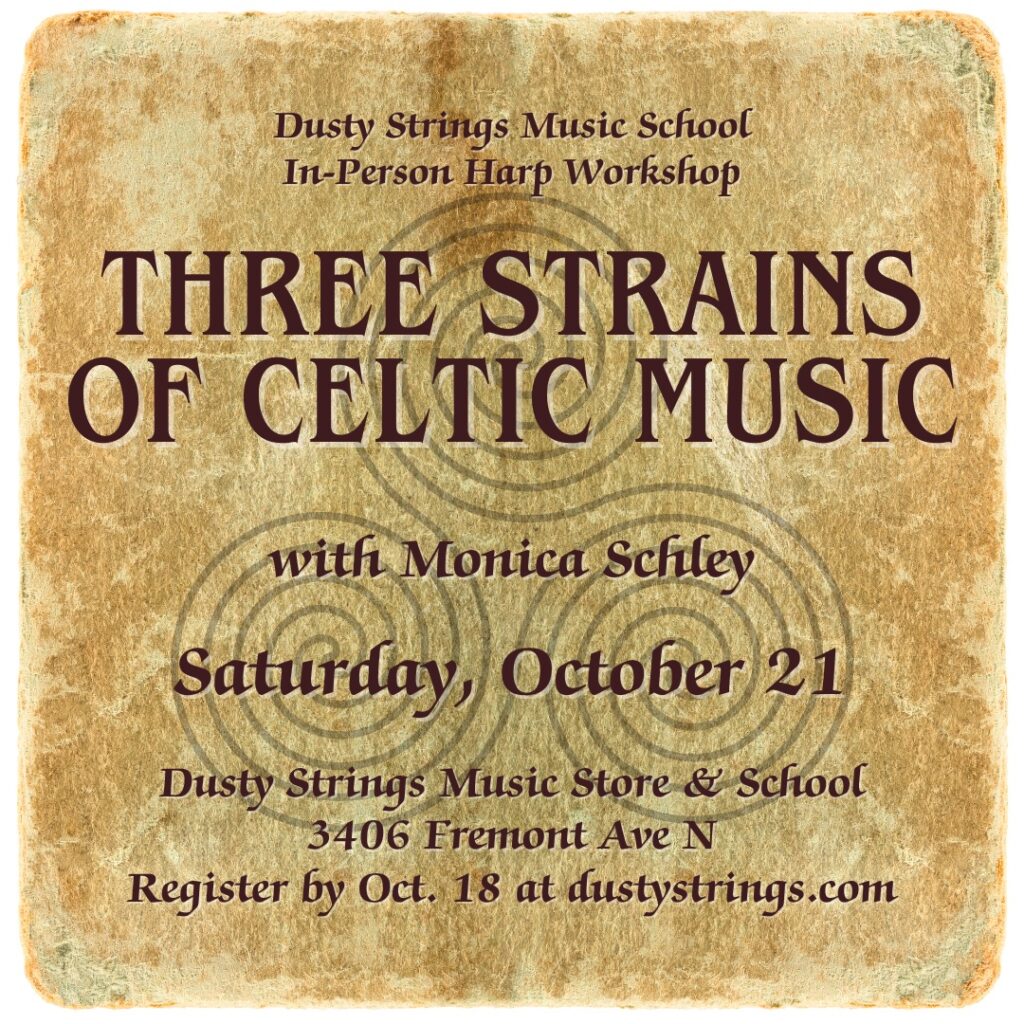
I’m excited to offer two in person workshops coming up in October at Dusty Strings Music School in Seattle (Fremont). Both of these group classes are for the beginner to intermediate harpist.
Sat, Oct 7 – Introduction to Harp Therapy More and more, harpists are lending their hearts and talents to playing healing music, as well as seeking certification to play at the bedside from accredited programs recognized by the National Standards Board of Therapeutic Musicians. In this class, you’ll explore effective styles, modes, and songs to benefit your repertoire, as well as what kind of training you’ll need to play music in health-care facilities.
Skills Needed: For the advanced beginner to intermediate-level player. You should have base of songs you know and a desire to learn new styles for therapy harp. This workshop is designed for those new to therapeutic harp, as well as those in certification programs. It does not certify you to play music at the bedside, but you will learn tools from a Certified Clinical Musician and gain access to references and resources to enrich your harp therapy journey.
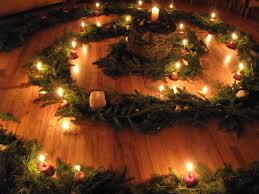
Sat, Oct 21 – Three Celtic Strains Join this class for a fun, creative approach to learning more about harp! Irish music tradition recognizes Three Noble Strains, or styles, of playing harp—joy, sorry, and sleep. In this workshop, you’ll learn what these strains are, what they mean, and how to apply them to harp music. You’ll participate in a Celtic Circle of Song, which focuses on chord progressions and playing freely, and add new tunes to your repertoire.
Skills Needed: For the advanced beginner to intermediate-level player. You should have base of songs you know and a desire to broaden your musicality. You do not need to know how to read music, though knowledge of chord charts and some notation is handy.
Harp is an instrument synonymous with peace and love. Harp also soothes and heals, alleviating emotional grief, physical distress, anxiety, and exhaustion. As a harpist, I enjoy offering the sounds of calming harp for funeral music. It gives a positive impact for clients who have lost a loved one. I’ve studied the musical styles that work well in the situation of death. As a Certified Clinical Musician, I have studied the musical styles and songs that work well in the situation of death, such as ambient music. I can also play music that fits your family’s individual requests.
I have written compositions for the intention of creating peace of mind and healing. This relaxing style of music, by nature, helps to alleviate grief, stress, and other emotions associated with coping with death. Also, I have arranged a collection of Hildegard von Bingen’s songs, who was a Medieval plant medicine healer, spiritual leader, artist, musician, and composer.
I am always glad to accommodate requests of the family as best as I can within the time frame of the event. For a traditional church memorial, I may be asked to play hymns, like “Into the Garden,” or “Amazing Grace,” as well as accompany a vocalist. For a modern request, I have played songs by Sting and Michael Jackson at a memorial, because those songs were favorites of the deceased. Cultural folk songs might also be another request if the person was an immigrant or felt close to their ethnic heritage.
Outdoor Funeral Music
Another way to that calming harp for funeral music gives a positive impact is outdoors. Sometimes, it is best to play non-familiar songs for the sake of a family’s grief, particularly if the cause of death was tragic. In this case, songs that serve more as background music are better, because they conjure up less of an emotional reaction at a time that might already be too difficult for loved ones to bear. When this is the situation, I play ambient non-familiar music to be as soothing as possible, as I would in a hospital or hospice – a skill I learned as Certified Therapeutic Musician.
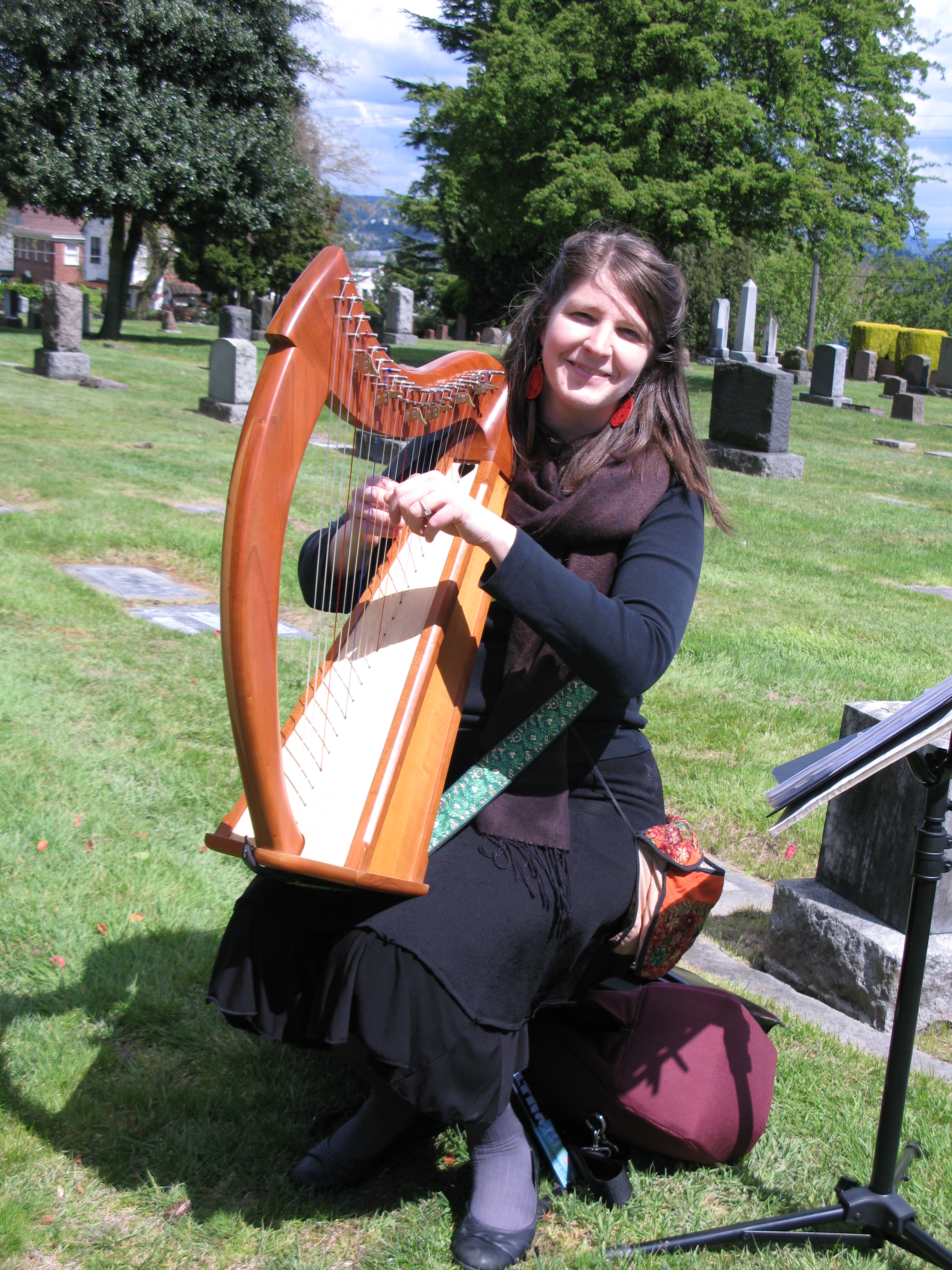
Gravesite burials are something I enjoy playing harp for when I am able to, and when weather allows. I have a very small harp that I use in these moments, but I can also bring my 34 string folk harp in the summer months. For many funerals, I have played harp at both the indoor memorial, and graveside location back-to-back on the same day, a scenario that works well at a traditional funeral home with attached cemetery. This photo was taken at Seattle’s iconic Lakeview Cemetery.
Plenty of people don’t want religious music at a funeral, and I have repertoire for them too. I am quite comfortable with traditional and non-traditional situations around death. I know how to seamlessly weave songs together if there is to be an event with little to no speaking.
I have been studying funeral music since 1995 when I played church organ at the funeral of a friend’s father, and I have been studying music much longer. Since 2012 I have studied and worked as a therapeutic musician, so that I can provide music as an in-person healing modality. I have seen countless times how calming harp music gives a positive impact to others.
Therapeutic Bedside Music
Places where I have experience and training to play harp music for death and dying:
Bedside vigil of someone actively passing on
Hospital and Hospice care
Group memorial ceremony (for funeral home or healthcare organization)
Individual memorial (in funeral home or columbarium)
Gravesite burial
Funeral home wake/visitation
Celebration of life
Combination of funeral home ceremony + gravesite relocation